By: Mandy Park
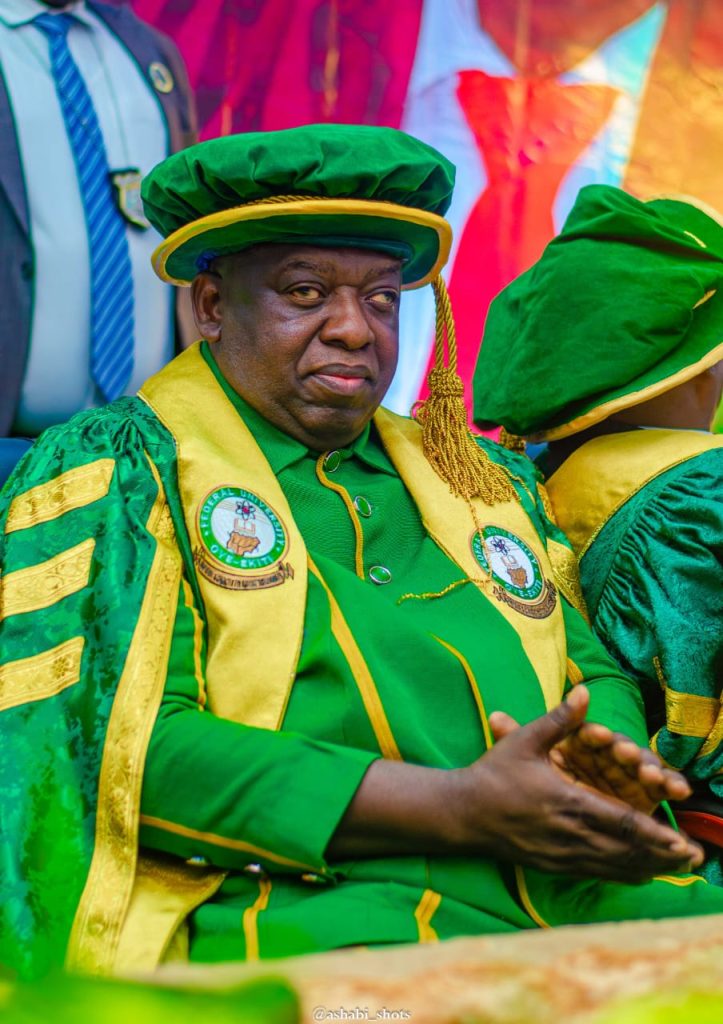
A former Commissioner for Finance and Economic Planning in Abia State, Prof Phillips Nto, has urged Nigerians to celebrate the country’s achievements since independence while focusing on strengthening human capital and national institutions for sustainable development.
Nto, who made the call in an Independence Day message marking Nigeria’s 66th anniversary on Thursday, said although the country still faced serious challenges, its journey since October 1, 1960, had produced significant economic, social, political, technological and institutional gains.
According to him, Nigeria of 2026 is considerably different from the country that attained independence 66 years ago.
The professor of Agribusiness Investment and Finance at the Michael Okpara University of Agriculture, Umudike, said the expansion of education, telecommunications, banking, infrastructure, entrepreneurship, democratic governance and the creative industry were among the achievements Nigerians should acknowledge.
He said, “As Nigeria marks 66 years of independence on October 1, 2026, there is a tendency to measure the country largely by what has gone wrong, what has been lost and what remains undone.
“There is certainly enough to worry about. But an anniversary is also a moment to pause, look back and acknowledge how far the country has travelled.
“Nigeria of 1960 is not the Nigeria of 2026.”
Prof Nto said the country’s population had grown from about 45 million at independence to more than 200 million, describing the youthful population as a potential economic asset rather than merely a challenge.
He, however, said the population boom must be matched with investments in education, skills, employment opportunities and productive economic activities to enable the country to convert its demographic strength into economic power.
The former commissioner also identified Nigeria’s vast natural resources as another reason for optimism, noting that the country’s economic potential extended beyond crude oil.
He listed limestone, coal, iron ore, tin, gold, lead-zinc and bitumen among the country’s mineral resources, while also pointing to its agricultural land, forests, rivers, wetlands and diverse ecological zones.
According to him, the growing attention to agriculture, solid minerals and other non-oil sectors demonstrates that Nigeria has economic opportunities beyond petroleum.
On education, Nto said the expansion of tertiary institutions since independence represented a major national transformation.
He noted that while Nigeria had only a handful of higher institutions at independence, the country now had hundreds of universities, polytechnics, colleges of education and other tertiary institutions.
He said the expansion had produced generations of professionals, including doctors, engineers, lawyers, accountants, journalists, scientists, researchers and teachers, who had contributed to development within Nigeria and abroad.
The erudite academic also described the growth of indigenous entrepreneurship as one of the most impressive stories of Nigeria’s post-independence development.
He said Nigerians had built businesses across banking, telecommunications, manufacturing, construction, transportation, agriculture, technology, hospitality, entertainment and retail, creating employment and economic opportunities.
“The story is even more remarkable at the level of micro, small and medium-sized enterprises. Millions of Nigerians have created businesses to provide goods and services, employ workers and sustain families,” he said.
Nto further highlighted the return to democratic rule in 1999 as a significant milestone, noting that Nigeria had sustained uninterrupted civilian government since then.
While acknowledging the country’s turbulent political history, including military interventions and the civil war, he said the continuity of democratic governance had provided space for political parties, civil society organisations, the media and citizens to participate in public affairs.
He said the telecommunications sector provided perhaps the clearest evidence of Nigeria’s technological transformation.
According to him, Nigeria had moved from a country where access to telephone services was extremely limited to one of Africa’s largest telecommunications markets, with mobile technology transforming banking, commerce, education, journalism and social interaction.
He also cited the emergence of fintech, digital payments and technology start-ups as evidence of the country’s growing digital economy.
The don said the banking and financial services sector had equally undergone considerable transformation, with mobile banking, electronic payments, agent banking and fintech platforms expanding access to financial services.
Nto identified manufacturing as another area where Nigeria had made progress, citing the development of local production capacity in cement, food and beverages, pharmaceuticals, fertiliser, petrochemicals and other industries.
He also praised Nigeria’s creative industry, particularly Nollywood and Afrobeats, for projecting the country’s culture internationally.
According to him, Nigerian musicians, filmmakers, writers, comedians, fashion designers, actors and visual artists had turned creativity into an international industry capable of generating jobs, attracting investment and promoting Nigeria’s cultural influence.
He said the achievements of Nigerians in the diaspora in medicine, science, technology, engineering, academia, law, finance, aviation and business also deserved recognition.
Nto said infrastructure development, aviation and expansion in electricity access were other areas where Nigeria had recorded progress since independence, although significant deficits remained.
He noted that the country had developed roads, bridges, airports, seaports, telecommunications infrastructure, housing and urban transportation systems that were largely absent or less developed at independence.
He, however, acknowledged that the infrastructure gap remained substantial but that the present administration is rising to the challenge.
The professor said Nigeria’s progress in electricity access also demonstrated both the gains achieved and the work still required, adding that the country had begun diversifying its energy sources through natural gas, solar power, mini-grids and other alternatives.
Beyond physical infrastructure and economic indicators, Nto identified the resilience and enterprise of Nigerians as perhaps the country’s greatest achievement.
He said Nigerians had continued to build businesses, create technology companies, produce films and music, cultivate farms, teach, practise medicine and law, report news and contribute to national development despite political and economic challenges.
“Nigeria has survived political crises, economic shocks, military rule, civil conflict, currency pressures, unemployment, infrastructure challenges and numerous other difficulties.
“Yet Nigerians continue to build,” he said.
Nto said the 66th anniversary should therefore be used not only to reflect on the country’s shortcomings but also to acknowledge its achievements and recommit to building a stronger nation.
“At 66, therefore, Nigeria is not where it ought to be, but neither is it where it started. The country has travelled a considerable distance,” he said.
He identified greater investment in human capital and stronger institutions as two key areas that should receive priority.
Prof Nto called for increased investment in education, healthcare, technical training, digital skills and research, saying Nigeria’s youthful population could only become an economic asset if young people acquired the skills and opportunities needed to contribute productively.
He also advocated stronger institutions capable of converting Nigeria’s natural and human resources into public value through transparent governance, predictable policies, effective regulation and sustained infrastructure investment.
He said the anniversary should be more than a ceremonial celebration.
“It should be an occasion to acknowledge the distance travelled, appreciate those who built the foundations on which today’s Nigeria stands, and commit ourselves to consolidating the gains.
“Nigeria’s story is not simply one of failures and disappointments. It is also a story of survival, enterprise, creativity, institutional development and human achievement.
“At 66, there is indeed much to glorify God for. And there is even more responsibility on the present generation to ensure that the Nigeria inherited by the next generation is stronger, more productive and more prosperous than the one we inherited.”
Nto, an All Progressives Congress chieftain, said the President Bola Tinubu-led Federal Government was addressing some critical national issues, adding that the gains recorded over the years should be consolidated for future generations.